How can artificial intelligence transform the way we recover and understand the past? Roman historian and papyrologist Anna Dolganov will present the world's first foundation Large Language Model for Ancient Greek, developed by the Austrian Academy of Sciences in collaboration with Mistral AI and SAIL. Reply. Trained on approximately 600 million words of historical Greek, the solution is designed to support the reconstruction, search and interpretation of damaged and previously unread ancient texts. The session will show how advanced AI can accelerate research once measured in years, opening new possibilities for scholarship and demonstrating how specialised AI can reshape even the most complex knowledge domains.
Speaker
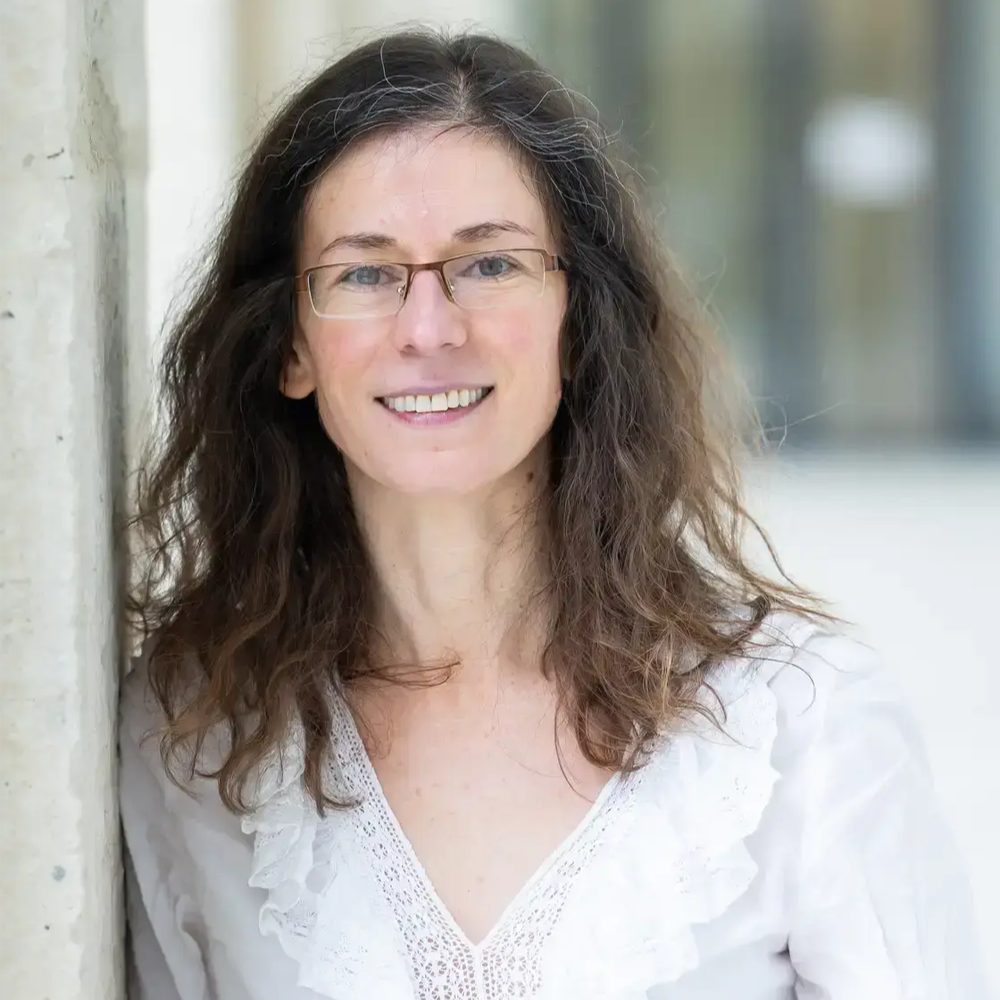
Anna Dolganov
Roman Historian and Papyrologist
Austrian Academy of Sciences
Anna is an internationally trained Roman historian (Harvard, Cambridge, Princeton) with expertise in the decipherment and interpretation of ancient documents (papyri and inscriptions). Her work has featured widely in international media, including the New York Times, National Geographic, Der Spiegel, Antike Welt, and even the Late Show with Stephen Colbert. Anna's interest in ancient documents led her from Princeton to Vienna, where the Austrian National Library houses one of the world's largest collections of ancient papyri.
In the fall of 2025 in partnership with Mistral and SAIL Reply, Anna launched the Decoding Antiquity project to develop cutting-edge AI for ancient languages. The team has created Apollo, the world's first multimodal LLM for Ancient Greek optimized for text reconstruction, with the thrilling prospect of propelling the decipherment of hundreds of thousands of unread Ancient Greek papyri. With the possibility of unlocking vast troves of historical knowledge with the help of advanced AI, we are on the brink of a revolution in the study of antiquity.
https://www.linkedin.com/in/anna-dolganov-5180a4130/
Thursday 8 | 10
Domus - ASTERIA GlyfadaThu 8 | 10
Speaker 1 Full Name
Title, Company, Country